
Ferrari's 70th Birthday: 7 Greatest Cars From 7 Decades

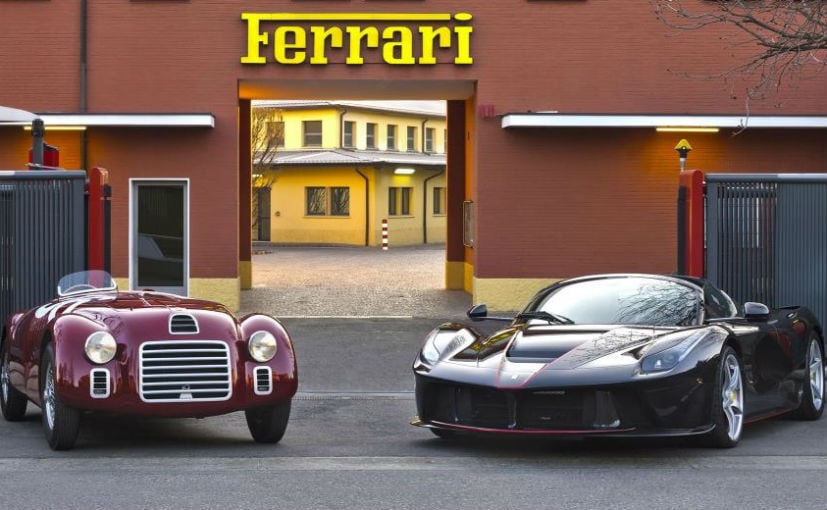
- Ferrari celebrated its 70th birthday on March 12, 2017
- Counting down some of the greatest Ferraris ever!
- Ferrari is Formula 1's most dominant team in history
On March 12, 1947, Enzo Ferrari fired up the first model to ever bear his name, the 125 S, and took it for a test drive on the streets of Maranello. 70 years down the line, the Ferrari badge has become synonymous with performance, exclusivity and possibly the best the automotive world has to offer. Enzo Ferrari’s incessant need to be the best in motorsport resulted in some absolutely epic road going automobiles. We take a look back at seven decades of Ferrari and choose seven cars that we think are the coolest, most beautiful and of course, the most revolutionary!
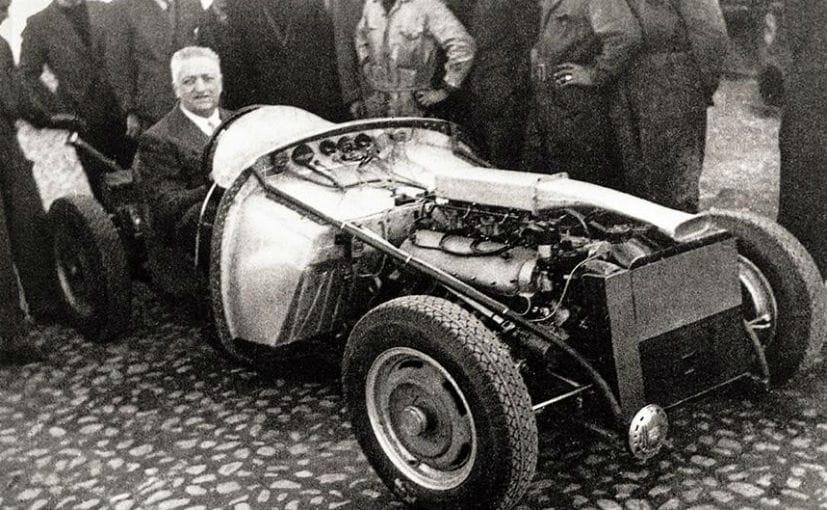
Enzo Ferrari in the 125 S rolling chassis
1947-1957
Ferrari 125 S
It is impossible to have a ‘Ferrari Greatest Hits’ list and not have the first ever car in it. The 125 S as we mentioned earlier was the first ever car production to feature Ferrari’s badge as we know it today. Under the hood was a 1.5 litre V12 engine designed by engine building legend Gioacchino Colombo and just two months after its first test drive on Maranello streets, the 125 S took to the race track on May 11.
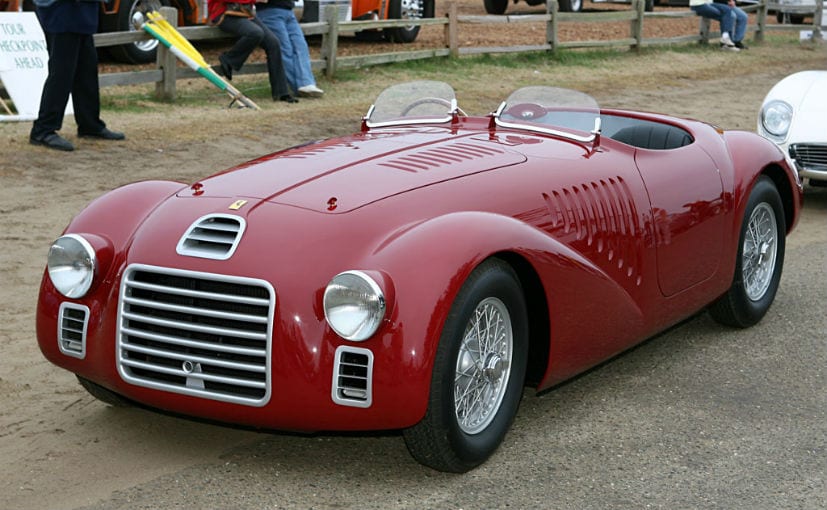
Ferrari 125 S
Featuring a design that was very distinct and that carried on to the likes of the 166MM, only two 125 S cars were ever built. Although both cars were officially dismantled and parts used for subsequent production models, the authenticity of a ‘surviving’ 125 S replica has been the subject of much debate in Ferrari aficionado circles.

Ferrari 250 GTO
1957-1967
Ferrari 250 GTO
The late 50s and early 60s saw the dominance of one particular type of front mounted V12 Ferrari family. Bearing the number or nomenclature ‘250’, the most sacred to most Ferrari lovers to date, this family of cars was available in a host of street and race models with a variety of body types. Of course, the most famous of the lot has to be the legendary Ferrari 250 GTO! Just 39 250 GTOs were manufactured between 1962 and 1964. This includes 33 cars with the original and iconic Series 1 bodywork made between 1962-1963, three cars made with the Series 2 body work in 1963-1964 and three more (designated 330 GTO) with larger engines made in 1964. Four of the original Series 1 cars were re-bodied to the Series 2 body in 1964 as a part of the ongoing racing efforts. As one of the most expensive cars on sale when launched, the 250 GTO’s buyers were hand picked by Enzo Ferrari himself, starting a tradition that continues to date. Incidentally, the Ferrari 250 GTO is also currently the most expensive car in the world with the last one sold bringing in a cool $38 Million or about Rs 251.42 Crore at auction!
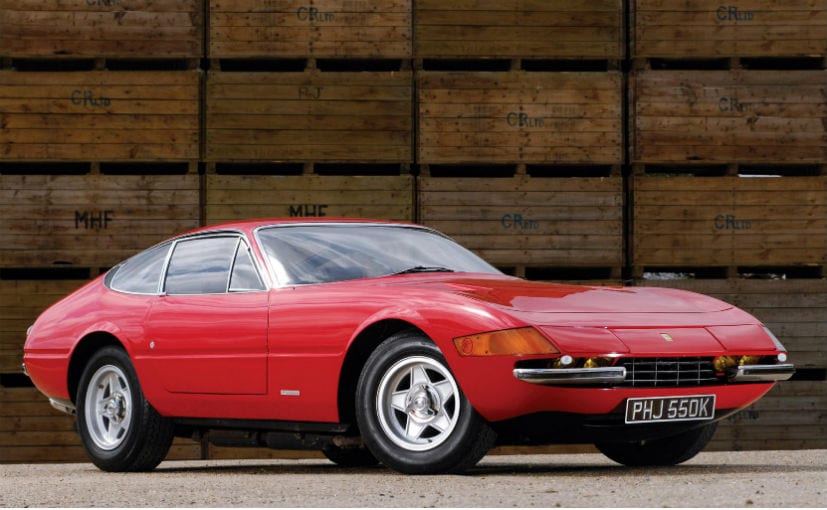
Ferrari 365 GTB 4 Daytona
1967-1977
Ferrari 365 GTB/4 ‘Daytona’
Possibly one of the prettiest Ferrari’s ever made, the 365 GTB/4 Daytona is yet another front engined V12 in our list – but this time, a four seater! Made between 1968-1973, the Ferrari 365 GTB/4 came out at the same time as the Lamborghini Miura but continued with the front engined, rear drive formula. The ‘Daytona’ name was never officially given to the 365 GTB/4 and was actually given to the car by the global media in honour of Ferrari’s 1-2-3 victory at Daytona in 1967. Under the hood featured a 4.4 litre V12 engine with 350 bhp and a top speed of 280 kmph. 0-100 kmph was disposed off in just under 5.5 seconds making it one of the fastest cars in the world at the time. Although the Daytona is known for its pop up headlamp, early Daytonas actually featured fixed headlights behind an acrylic glass cover. A new U.S. safety regulation banning headlights behind covers resulted in retractable pop-up twin headlights in 1971 but the earlier headlamp style was used extensively for racing too. Only 1406 Daytonas were ever built which include 156 right hand drive cars for the UK market, 122 factory made spyders and 15 competition cars which feature special lightweight bodies and highly tuned engines. The Ferrari Daytona of course also became famous in movies and TV shows with an original spyder used in The Gumball Rally and two replicas used in the popular TV show, Miami Vice.
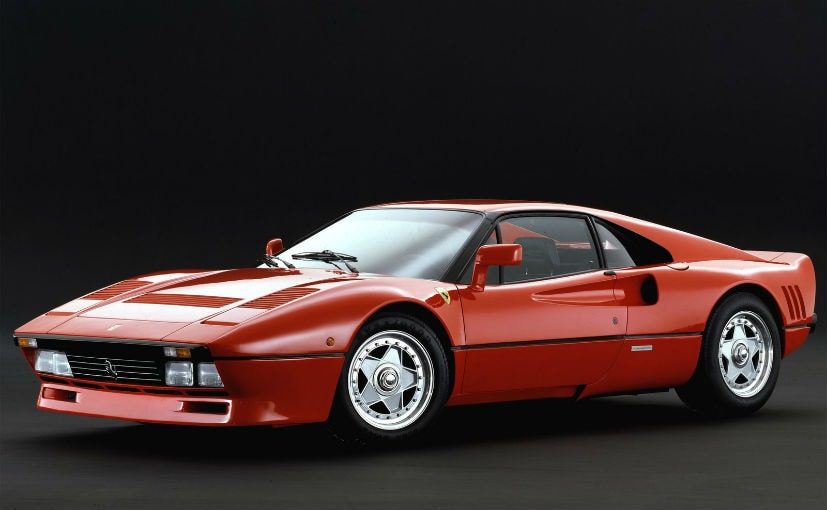
Ferrari 288 GTO
1977-1987
Ferrari 288 GTO
In the mid 1980s, Ferrari considered an entry into the insane world the World Rally Championship’s Group B class. Taking the Ferrari 308 as a base, the twin turbocharged Ferrari 288 GTO was made to take on the likes of the Lancia O37 an the nearly invincible Audi Quattro. Sadly, in 1986, after the death of Henry Toivonen and co-driver Sergio Cresto at the Rally De Corse in Corsica, Group B was banned before the Ferrari 288 GTO could take to the rally stages ensuring all the 272 cars were never used for racing. The 288 GTO featured a 2.8 litre V8 with two IGI turbos and intercoolers along with a state of the art Weber-Marelli fuel injection unit. The Ferrari 288 GTO was also only the second car ever in the Ferrari lineup to take on the GTO – Gran Tourismo Omologato (Grand Touring Homologation Special) moniker until the 599 GTO came along in 2010. The 288 GTO has a transversely mounted V8 engine with a racing gearbox mounted at the rear for better traction. The 288 GTO was made from a variety of composite materials. Steel was used just for the doors because major body panels were made from moulded fiberglass. Kevlar was used for the hood, and the roof was made from Kevlar and the 288 GTO was also one of the first few cars globally to use carbonfibre.
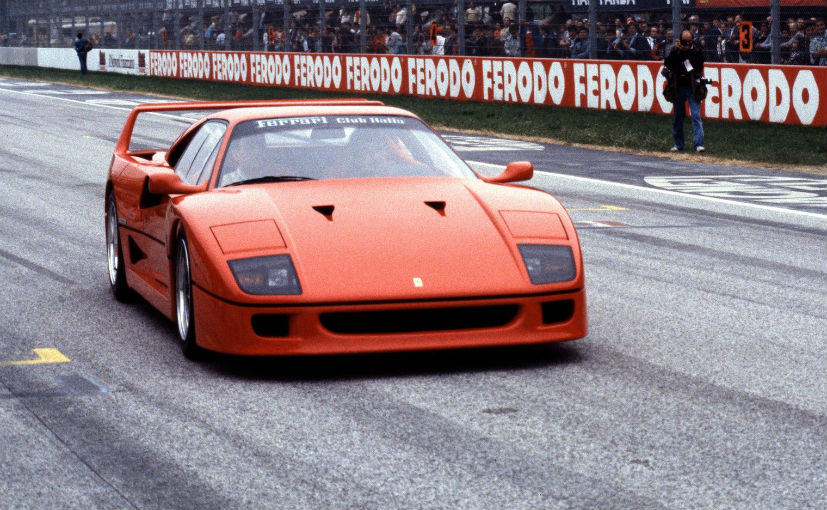
Ferrari F40
1987-1997
Ferrari F40
The Ferrari F40 is the greatest Ferrari ever made. Period! In fact, in my opinion, the F40 could very well be the greatest car ever made! As the last car made under the guidance of Enzo Ferrari, the F40 featured outrageous aero, an even more outrageous engine and the top speed of 201 mph! With a total of 1311 F40s made with an original selling price of $400,000 in 1988! The Ferrari F40 was made extensively out of carbonfibre and Kevlar and has a mid mounted 2.9 litre engine with a large clamshell bonnet that became as iconic as the car itself. The engine featured a twin turbo setup with massive intercoolers making 478 bhp. The F40 initially came with no catalytic convertors but a change in US regulations meant a large cat-con was added later. The F40 has an iconic triple exhaust setup with the flanking exhaust pipes guiding exhaust gases from each bank of cylinders while the central pipe guiding gases released from the wastegate of the turbochargers. The F40 and its nemesis, the Porsche 959 were as different as chalk and cheese. While the 959 featured all-wheel-drive and four wheel steering and a comfortable cabin, the F40 featured a no-nonsense approach to performance with bare basic interiors, exposed carbon everywhere and racing bucket seats. The F40 also became the poster car of choice for a whole generation of millennials who grew up in the early 90s or late 80s with its low slung nature, iconic star pattern wheels and gigantic rear wing! The F40 was also extremely competitive in all the racing programs that it participated in the LM or GTE guise. Contrary to popular belief, there was no F40 lightweight ever officially made by the factory. The so called lightweight cars were actually made in Japan with the updated OZ racing wheels and fixed louvered windows like the ones on the race cars.
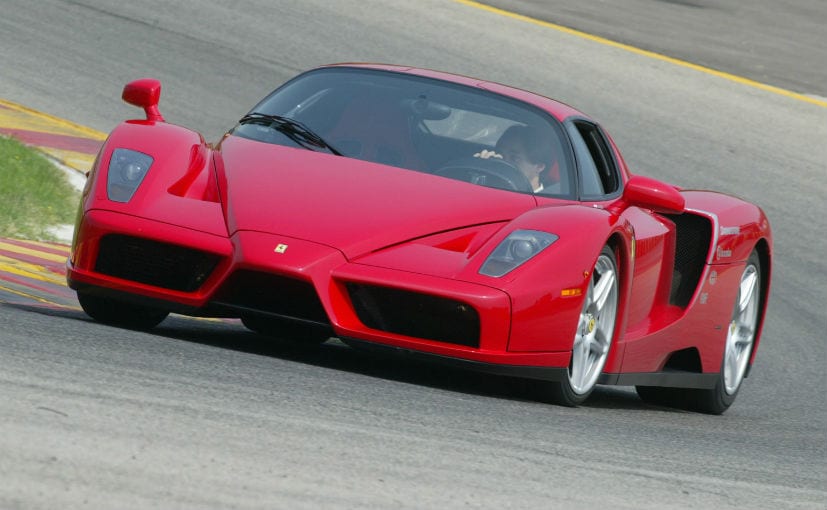
Enzo Ferrari
1997-2007
Enzo Ferrari
Launched in 2003, the Enzo Ferrari (not Ferrari Enzo) is one of the greatest cars ever made in modern history. The Enzo was made out of carbonfibre and featured a race bred V12 engine with a sequential semi automatic gearbox with LED shift lights on the steering wheel. The pushrod type suspension has electronic adjustments from the cabin itself – a novelty in 2003. The engine itself, a 6.0 litre unit made 650 bhp of peak horsepower and 657 Nm of peak torque with 0-100 kmph times of 3.2 seconds. At the time, the Enzo was one of the fastest accelerating cars in the world with a top speed of 355 kmph. The Enzo was also made famous for its iconic butterfly doors, a trait that has stayed on for Ferrari’s most exclusive products. Originally, 349 Enzo Ferrari’s were made with invitations to buy the car going out to people who had bought the F40 and the F50 (both!). All cars were presold before the launch but a little more public pressure meant that Ferrari conceded to make 50 more cars. In 2004, Ferrari made one last Enzo specially for the Pope and the Vatican. Enzo #400 was eventually sold at auction for over $1.1 million. There were plans to make a convertible or targa version of the Enzo but that was never officially done from the factory. One customer modified Enzo Targa does exist though. The Enzo also spawned Ferrari XX division. The XX race division made the FXX based on the Enzo. Too outrageous to be driven on the road and with too much tech to conform to any sort of racing series, the FXX is essentially a very very expensive track toy for a few exclusive people who can afford one.
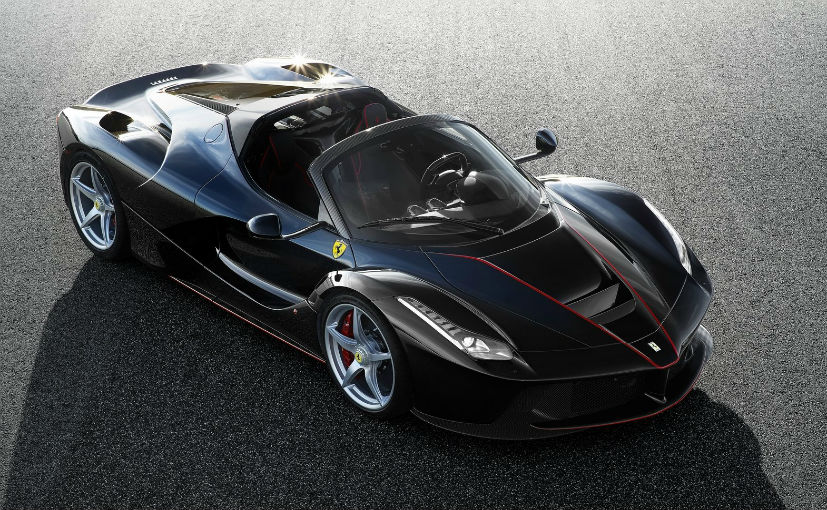
LaFerrari Aperta
2007-2017
LaFerrari
Translating directly as ‘The Ferrari’, the LaFerrari is the current ruler of the roost when it comes to the prancing horse’s stables. The LaFerrari is hypercar which has both, a naturally aspirated V12 engine and a Formula 1 inspired KERS system. The internal combustion engine makes 789 bhp of peak power and 700 Nm of peak torque while the KERS system and the electric batteries provide an extra 161 bhp of peak power. Totally as a joint unit, the LaFerrari makes 950 bhp of peak power and 900 Nm of peak torque, which is enough to get the car from 0-100 kmph in under 3 seconds and on to a top speed of about 350 kmph. Incidentally, 0-200 kmph is achieved in under seven seconds while 0-300 kmph is achieved in under 15 seconds! As with the Enzo, Ferrari and hand invited LaFerrari buyers picked in order to keep the clientele as exclusive as possible. Ferrari made 499 LaFerrari coupes with #500 made later specially to auction off for the National Italian American Foundation’s Earthquake Relief Fund and to help out with the severe earthquakes that devastated central Italy. The car sold for a staggering $ 7 million (Rs 46 Crore) making it the most valuable car made in the 21st century. In 2016, The LaFerrari Aperta or roadster with a removable carbon fibre roof or removable cloth roof was unveiled at the 2016 Paris Auto Show. Only 209 units of the Aperta will ever be produced. The LaFerrari has also spawned a XX version called the FXXK. The FXXK is limited to 40 units, all of which were sold before the car was unveiled.
Related News


Popular Ferrari Models


Latest Cars


Upcoming Cars


Latest News


 Sarthak Mahajan | Aug 10, 2026Top 5 Major Feature Updates On The New Mahindra Scorpio-NMahindra recently launched the updated Scorpio-N. Here are the top five features to look out for.1 min read
 car&bike Team | Aug 10, 2026New Ducati Monster V2 Launched In India At Rs 13.99 LakhThe updated naked Ducati gets a new 890cc V2 engine in place of the outgoing 937cc unit, along with revised ergonomics and more.1 min read
 Abhishek Nigam | Aug 10, 2026TVS Orbiter Electric Scooter Now Costs Up To Rs 4,000 MoreTVS hikes price of its popular urban EV runabout2 mins read
 car&bike Team | Aug 8, 2026Bugatti Destrier Revealed As One-Off Bolide-Based Hypercar With 1,578 BhpBugatti has revealed the Destrier, a one-off based on the Bolide but with a completely different design brief.3 mins read
 car&bike Team | Aug 8, 2026KTM 160 Duke, RC 160 Prices Hiked By Up To Rs 15,000KTM India has revised the prices of its entry-level motorcycles, with both the 160 Duke and RC 160 getting more expensive.1 min read
 car&bike Team | Aug 8, 2026MG Majestor SUV Prices Hiked By Rs 1.50 LakhAfter the hike, prices for the Majestor now start at Rs 42.49 lakh (ex-showroom) for both 4x2 variants.2 mins read
 Bilal Firfiray | Aug 1, 2026Toyota Hilux Review: The InvincibleMarking it as the ninth generation, the Hilux comes with a major cosmetic overhaul. But is it still relevant enough for the current times or is it getting too long in the tooth?5 mins read
 Bilal Firfiray | Jul 30, 2026Kia Syros EV Review: Best EV To Buy Under Rs 20 Lakh?The Kia Syros EV comes into the game with a modern design, spacious cabin, strong performance, decent range and an aggressive pricing. But could it become the new benchmark under Rs 20 lakh?5 mins read
 Jaiveer Mehra | Jul 27, 20262026 Maruti Suzuki Brezza Facelift Review: Bestseller Joins The Turbo ClubWhile Maruti’s facelifts have always tended to bring subtle updates over the outgoing models, the latest Brezza brings some heavy updates under the skin, including a new 6-speed manual gearbox and, for the first time, a turbocharged petrol engine option.1 min read
 Bilal Firfiray | Jul 24, 2026Honda ZR-V Review: Who Is It For?Honda has brought the new ZR-V to India as their current flagship offering. It’s a CBU, it’s a hybrid, and it’s here for a limited few. Who is it for though?1 min read
 Girish Karkera | Jul 29, 2026Mercedes-AMG E53 4MATIC+ PHEV First Drive Review: Just What The Doctor OrderedThere are luxury cars and there are high-performance cars. But what if you want both for the price of one? Mercedes-Benz has a recommendation that promises to tread a fine line between the two – the second generation E53 with a twist.7 mins read