
Need For Speed: What Makes Formula One Cars So Fast?


- F1 cars have high top speed because of downforce and grip
- F1 cars can reach a top speed of 240 MPH
- Aerodynamic looks and high-performance engines define F1 cars
To give you a little perspective on the speed these cars clock, just recently in Melbourne in 2019, a car clocked a lap time of 1 minute and 25 seconds. This means that the car covered just over 5 kilometres in less than one and a half minutes.
A modern Formula 1 car goes from 0 to 60 MPH in less than 2 seconds and can reach a top speed of 240 MPH. The G forces a Formula 1 driver experience is more than what astronauts experience during a shuttle launch.
So what features of Formula One cars make them so fast? Let's dive in and have a look!

Photo Credit: www.formula1.com
Aerodynamics
These cars don't just have powerful engines; they also go lightning fast on the corners because aerodynamics play's a role in their movement. Aerodynamics, in a nutshell, means the effect of air on an object and its analysis. It is a known fact that teams allocate up to 20% of their budgets on the aerodynamics of their cars. Aerodynamics are essential because they generate downforce, which means that the cars get pulled into the ground. More downforce means more grip on the ground, and cars can turn quicker on turns, leading to faster lap times.

Photo Credit: www.marca.com
The Wings
The front part of the F1 car is responsible for 40% of the downforce that a car generates. It is naturally the first part that comes into contact with air at high speeds, and it is designed in a way (upside down) to ensure that the car gets stuck to the ground rather than flying off. The wings also make the car move faster.
Optimization
The downforce in a Formula 1 car has to be adjusted with the track type. With the change in tracks, the teams' strategy and car's features change. On tracks where there are more turns, such as the Singapore circuit, the teams alter the features of their car to create more downforce, which allows the car to take more turns and at faster speeds to reduce lap times.
On a circuit like Monza, where there are fewer turns, the teams reduce the features and alter the car to create lesser downforce to go faster on straight stretches.
The Engine
The engine of an F1 car is typically sized like the one in a passenger car, but it is much more powerful. These cars use short-stroke engines, and their cylinder looks like a honey puck. This shape allows the engine to take in more air and fuel with short strokes for the engine pistons. This allows a lot more efficiency.

Photo Credit: twitter.com
The Gearbox
Did you know that the F1 cars have semi-automatic gearboxes? The gearboxes are automated, but the drivers use the clutch while starting the car and change the gears themselves. These gears are mounted on the back of the steering wheel, and engaging them at the correct times requires a lot of skill.


Latest News


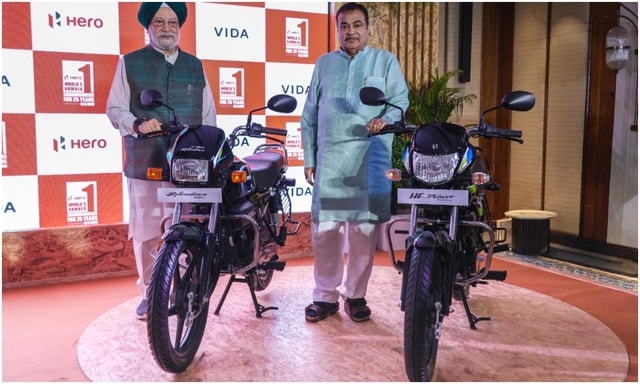 Amaan Ahmed | Jun 3, 2026Hero Splendor Plus Flex Fuel, HF Deluxe Flex Fuel Launched In Delhi And MaharashtraWith a view to ease any hesitance that may surface in the mind of commuter motorcycle buyers, Hero MotoCorp has launched flex-fuel variants of two of its most popular models that will go on sale in July.2 mins read
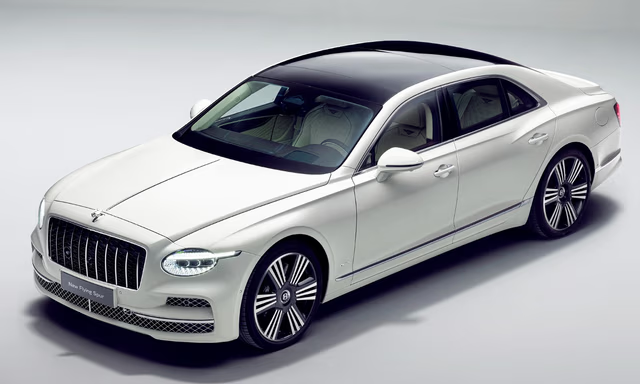 Jaiveer Mehra | Jun 3, 20262027 Bentley Flying Spur Debuts With Continental GT-Like Face, 671 bhp V8 PHEV OptionThe updated Flying Spur range sees the return of the Flying Spur S as well as the addition of new optional features.1 min read
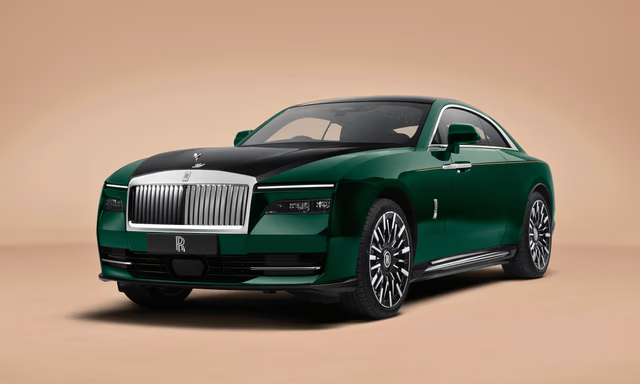 Jafar Rizvi | Jun 3, 2026Rolls-Royce Spectre Series II Unveiled With More Power And RangeThe electric two-door coupe gets an addition of up to 18 per cent to its range, while charging time is down by 14 per cent.1 min read
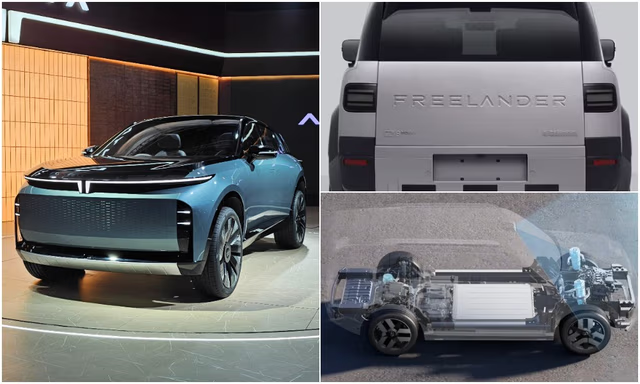 Amaan Ahmed | Jun 3, 2026Chery Inside: Tata Motors Switches To CJLR's Freelander Platform For First Avinya EVTata has revealed the first model under its Avinya family of electrified vehicles will roll out in 2027 from its new plant in Tamil Nadu.4 mins read
 Girish Karkera | Jun 2, 20262026 Citroen eC3 X EV Previewed Ahead Of India LaunchFollowing significant updates for its stablemates last year, the eC3 is about to receive a much-needed update,; fresh interior and marginally enhanced range expected1 min read
 car&bike Team | Jun 2, 2026All-New Audi Q7 To Be Unveiled Soon; First Teaser OutAiming to recreate the magic of the first-gen SUV, Audi promises the latest in the Q7 lineup will have a 'sporty, powerful design' and 'a highly versatile interior'.2 mins read
 Janak Sorap | Jun 2, 2026California Superbike School: Finding Speed The Right WayThree days of coaching, track time and self-discovery at California Superbike School revealed that riding faster begins with understanding how to ride better.7 mins read
 Girish Karkera | May 31, 20262026 Honda City e:HEV Review: Smartest Compact Sedan To Buy?The most affordable strong hybrid sedan in India looks more interesting than any of its past avatars1 min read
 Bilal Firfiray | May 29, 2026Skoda Octavia vRS Review: The Sensible Car Every Car Guy (Eventually) WantsThe Skoda Octavia vRS blends practicality with performance. It’s a real enthusiast appeal in a sensible sedan package.1 min read
 Bilal Firfiray | May 25, 2026Renault Duster 1.3 Turbo DCT Road Test Review: The Solid Middle GroundMarking its return, the Renault Duster offers a strong ride quality, a refined 1.3 turbo-petrol engine, balanced handling and lot more impressive cabin. Should you buy it though?5 mins read
 Preetam Bora | May 23, 20262026 Harley-Davidson X440T Road Test Review: Did Harley Just Fix Everything?We spent a few days with the Harley-Davidson X440T to understand if Harley-Davidson India has managed to fix all the shortcomings of the standard X440!9 mins read