
BSA Motorcycles: A Brief History Of The Iconic British Brand

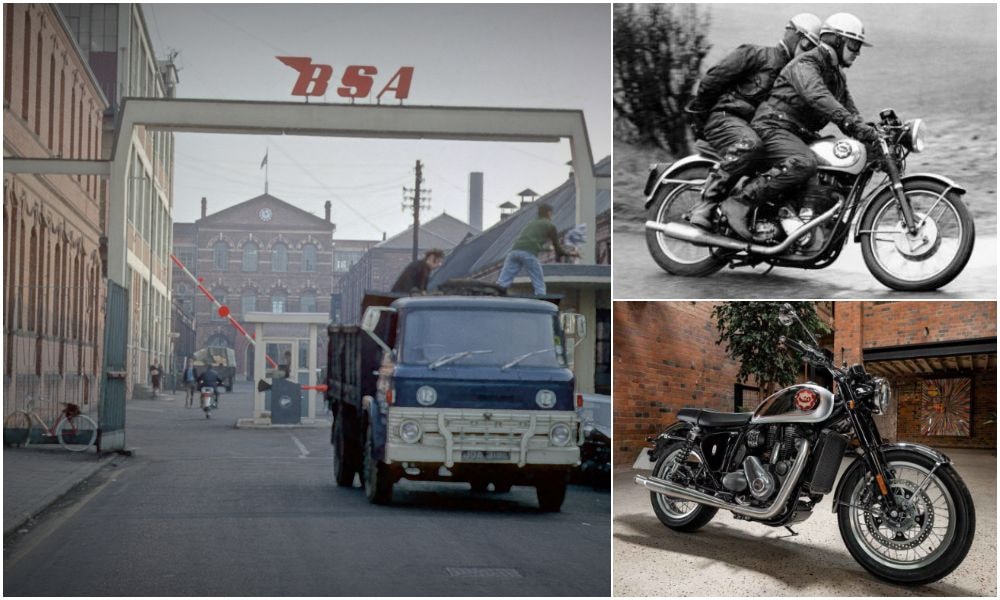
- BSA has played a significant role in shaping the history of motorcycles in England
- The brand also used to manufacture three- and four-wheeled vehicles
- Mahindra Group currently owns rights to the BSA brand
From guns to motorcycles and lots in between, BSA is a well-known British motorcycle brand with a grand history that began as a small weapons manufacturer in England during the 1860s. Originally founded as Birmingham Small Arms, the company used to make rifles for the military, and air guns for sports, along with multiple manufacturing businesses. By 1880, BSA rose to become the largest arms manufacturer in Europe.
In the years to follow, the company which also was manufacturing bicycles then, introduced its first motorcycle in 1910. Powered by a single-pot motor it managed a peak power output of 3.45 bhp that was delivered to the rear wheel via a belt drive. Showcased at the 1910 Olympia Show in London, the motorcycle was an immediate success with the entire production sold out for the following three years.
In 1914, World War I broke out. Being a well-established arms manufacturer, BSA pivoted its manufacturing towards producing weapons for the British military. Once the war was over in 1918, BSA got back to building motorcycles, and due to its popularity soon became a household name in Britain especially since they were very affordable. In addition to that, BSA also became a popular choice of racers for competition and street racing.
Also Read: Top BSA Motorcycles Produced In The Past
During the war, BSA had also built many aircraft which eventually led to acquiring the assets of the Aircraft Manufacturing Company (Airco) in 1920 post-war. While BSA had no intentions of building aircraft, the company along with the chief designer of Airco, entered the car manufacturing industry in 1921 by introducing a V-twin engined light car, which was followed by three and four-wheeled cars, wherein the latter were powered by four-cylinder engines in 1929. In 1931, BSA also acquired Lanchester Motor Company, which manufactured contract vehicles for the British military.
During this time, the production of the BSA motorcycles had further expanded. The company acquired a lot of success with the launch of its first V-twin model in 1919. Called the ‘Model E,’ it had a 770 cc 50-degree side-valve motor that was mated to a three-speed gearbox with a 7-plate clutch. The motorcycle had a chain final drive and a sprung cantilever fork setup at the front. Until the start of World War II, BSA was manufacturing several motorcycles including the Model E, G30-G35 and the G14 in the V-twin range, and a bunch of ‘B’ and ‘M’ series motorcycles that were powered by single-cylinder engines.
Also Read: Why Mahindra Bought BSA?
This was also when the first BSA Gold Star was introduced in 1938. Successor to the BSA Empire Star, the Gold Star was offered with a 500 cc single-cylinder four-stroke motor and was known as one of the fastest production motorcycles of the 1950s. The production of the Gold Star continued till 1963 and it also has a 348 cc iron engine that was introduced after the war. The Gold Star saw a lot of success in different forms of competition motorsport that included racing, motocross, trails, scrambles and endurance races.
During the Second World War, which lasted from 1939 to 1945, BSA was back at manufacturing weapons and other ammunition for Britain’s military forces, with techniques and machines developed by the company post-World War I. In addition to this, BSA also manufactured a total of 1,26,334 motorcycles, all M20s, for the military. The M20 was a heavily-framed model with the provision for sidecar attachment. It was powered by a simple 500 cc single-cylinder four-stroke side-valve motor with a modest power output of 13 bhp. Due to the low compression layout of the motor and a different 4-speed gearbox, the M20 packed a lot of low-end torque which helped it take over most challenging terrains.
After the war, the demand for motorcycles was again on the rise as countries around the world needed cheap modes of transportation as their economies had taken a hit due to the war. In 1950, BSA acquired Triumph Engineering Co. Ltd. and with other motorcycle brands already under its umbrella BSA became the largest motorcycle manufacturer in the world. Addressing the need for cheap transportation, BSA built the Bantam, a simple single-cylinder two-stroke motorcycle with engines of 125cc to 175cc displacements, derived from the German DKW RT125. While exact production figures are unknown, the production of the Bantam was easily beyond the five lakh mark.
In the following years, the BSA Motorcycles Ltd. separated from its parent company. It went on to manufacture and export BSA and Triumph motorcycles to different countries including the US market. The popularity of the brand with regards to the high quality and the success earned the company the Queen’s Award. With the majority of the exports being BSAs, their motorcycles became popular among police forces worldwide for patrolling duties. BSA also went on to introduce three-cylinder engine motorcycles that were popular for their performance and capabilities to take on tough terrains.
However, things started to change for BSA through the early 1960s and onwards with the onset of competition predominantly from Japanese two-wheeler brands like Honda, Kawasaki and Suzuki, and from other European names like Jawa/CZ and Bultaco, which started to eat up BSAs market share. With scooters and mopeds taking preference over motorcycles, BSA couldn’t cope with the challenges and due to losses in new developments that didn’t work out, the company incurred huge losses. While BSA did make efforts to spring back with the introduction of multiple model variants with modern features, it was late to the party and got second-rated to the electric-start Japanese motorcycles. In the summer of 1973, BSA filed for bankruptcy, ceasing 63 years of production.
Also Read: BSA Gold Star 650 To Be Introduced In India On August 15
Since then, the BSA brand remained out of the limelight until 2016, when Classic Legends Pvt. Ltd., a subsidiary of the Mahindra Group, acquired the brand. The next few years were spent taking inspiration from the old models and developing the first new model, the 2021 BSA Gold Star. This model is powered by a modern 652 cc single-cylinder liquid-cooled mill capable of producing 44 bhp and 55 Nm and comes mated to a 5-speed gearbox. Featuring classic styling and a modern powertrain, the current BSA Gold Star is a present to reclaim its glory in the current times. While the motorcycle has been on sale in international markets, Classic Legends will soon debut the Gold Star in India on August 15 this year.
Related News


Latest Cars


Upcoming Cars


Latest News


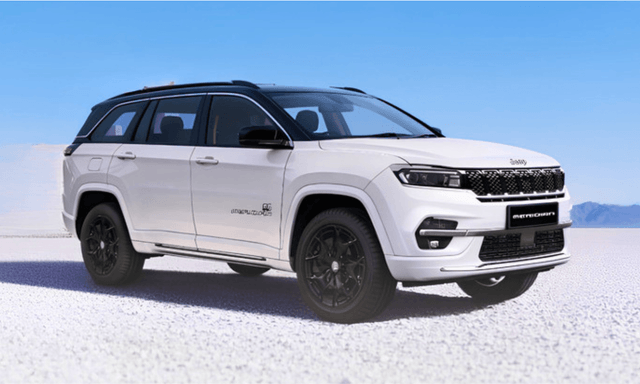 car&bike Team | Jul 25, 2026Jeep Meridian 85th Anniversary Edition Launched At Rs 36.05 LakhLimited to 85 units, the special edition gets cosmetic changes and also features the CARA AI voice assistant.1 min read
 car&bike Team | Jul 25, 2026River Indie Electric Scooter Crosses 50,000 Units Production MilestoneThe milestone comes less than three years after the first unit rolled out of the company's Hoskote manufacturing facility.2 mins read
 car&bike Team | Jul 25, 20262026 Maruti Brezza Facelift Fuel Efficiency Figures RevealedThe updated model returns up to 26.90 km/kg in CNG guise, while the newly introduced turbo-petrol delivers a claimed 20.47 kmpl.2 mins read
 Jafar Rizvi | Jul 25, 2026Honda ZR-V Hybrid SUV Launched In India At Rs 47.99 LakhThe ZR-V is Honda’s first hybrid SUV for India and arrives as a CBU.1 min read
 Jafar Rizvi | Jul 24, 20262026 Maruti Brezza Facelift: Variants, Features, Engine Options ExplainedThe 2026 Maruti Suzuki Brezza is offered in four trim levels: LXi, VXi, ZXi and ZXi+ and with two engine options.5 mins read
 Jafar Rizvi | Jul 24, 20262026 Maruti Brezza Facelift Launches With Three Major FirstsThe 2026 Maruti Suzuki Brezza has arrived, and along with carrying a five-star Bharat NCAP rating, the model brings three firsts for both the Brezza and, in one case, Maruti itself.2 mins read
 Bilal Firfiray | Jul 24, 2026Honda ZR-V Review: Who Is It For?Honda has brought the new ZR-V to India as their current flagship offering. It’s a CBU, it’s a hybrid, and it’s here for a limited few. Who is it for though?1 min read
 Shams Raza Naqvi | Jul 15, 2026Ferrari 849 Testarossa Spider Driven: Rs. 11.25 Crore Meets 1,000 bhpWe got behind the wheel of the most powerful convertible from Ferrari. What makes the 849 Testarossa Spider Special? We tell you.1 min read
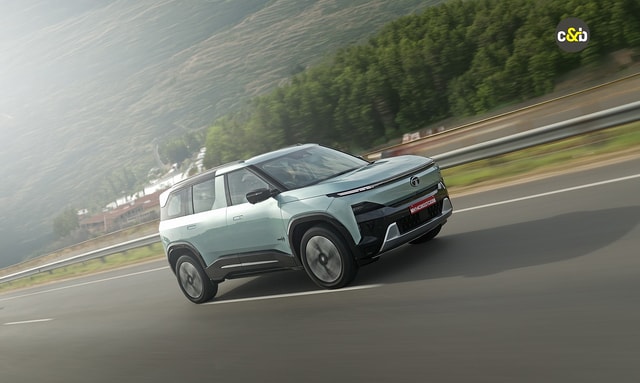 Bilal Firfiray | Jul 12, 2026Tata Sierra EV Review: Reborn In The Electric AgeThe Tata Sierra EV isn’t drastically different from its ICE counterpart when it comes to design. But being the seventh electric offering from the Indian brand, it has gotten a few things right, and very few things wrong. But is it a compelling package to buy?5 mins read
 Jafar Rizvi | Jul 13, 2026TVS Orbiter Long-Term Review (Report 1): Settling In Takes TimeFirst impressions weren't the strongest, but the Orbiter has made a mark in its first month in the car&bike garage.5 mins read
 Seshan Vijayraghvan | Jul 7, 2026Tata Altroz Petrol DCA Long-Term Review: Intercity & Highway Driving ReportWe tested the Tata Altroz Petro DCA’s highway manners, intercity performance, and real-world fuel efficiency.1 min read