
Toyota Halts India Expansion, Blaming 'We Don't Want You' Taxes

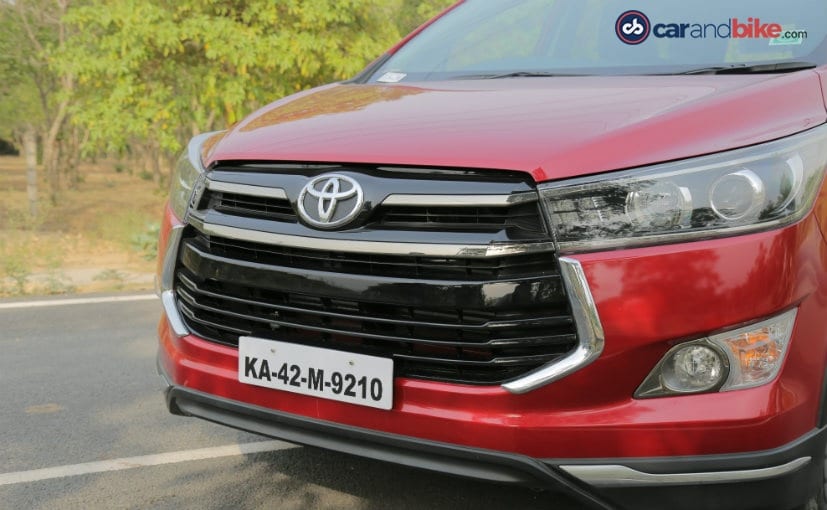
- Toyota says it won't expand further in India due to the high tax regime
- Toyota says high taxes make owning a car difficult for many consumers
- Toyota began its India operations back in 1997
Toyota Motor Corp. won't expand further in India due to the country's high tax regime, a blow for Prime Minister Narendra Modi, who's trying to lure global companies to offset the deep economic malaise brought on by the coronavirus pandemic. The government keeps taxes on cars and motorbikes so high that companies find it hard to build scale, said Shekar Viswanathan, vice chairman of Toyota's local unit, Toyota Kirloskar Motor. The high levies also put owning a car out of reach of many consumers, meaning factories are idled and jobs aren't created, he said.
"The message we are getting, after we have come here and invested money, is that we don't want you," Viswanathan said in an interview. In the absence of any reforms, "we won't exit India, but we won't scale up."
Toyota, one of the world's biggest carmakers, began operating in India in 1997. Its local unit is owned 89% by the Japanese company and has a small market share -- just 2.6% in August versus almost 5% a year earlier, Federation of Automobile Dealers Associations data show.
Also Read: 37 New COVID-19 Positive Cases Recorded At Toyota's Bidadi Plant Last Week

Toyota says that increasing taxes put owning a car out of reach of many consumers, meaning factories are idled and jobs aren't created
In India, motor vehicles including cars, two-wheelers and sports utility vehicles (although not electric vehicles), attract taxes as high as 28%. On top of that there can be additional levies, ranging from 1% to as much as 22%, based on a car's type, length or engine size. The tax on a four-meter long SUV with an engine capacity of more than 1500 cc works out to be as high as 50%.
Also Read: Car Sales August 2020: Toyota Records 48.08 Per Cent Decline
Ford, GM Out
The additional levies are typically imposed on what are considered to be "luxury" goods. As well as cars, in India that can include cigarettes and sparkling water.
India is planning to offer incentives worth $23 billion to attract firms to set up manufacturing, people familiar with the matter said last week, including production-linked breaks for automakers. International automakers have struggled to expand in the world's fourth-biggest car market.
General Motors Co. quit the country in 2017 while Ford Motor Co. agreed last year to move most of its assets in India into a joint venture with Mahindra & Mahindra Ltd. after struggling for more than two decades to win over buyers. That effectively ended independent operations in a country Ford had once said it wanted to be one of its top three markets by 2020.
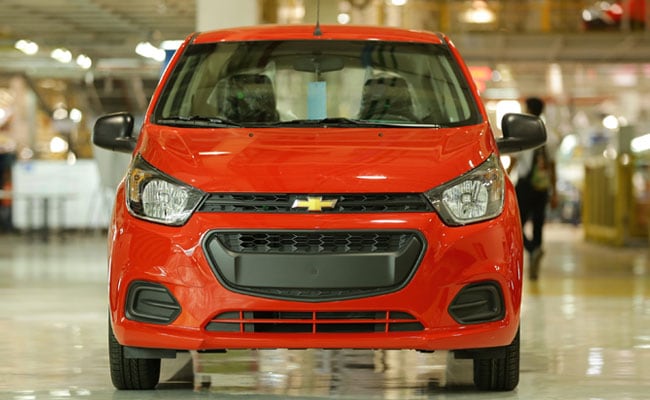
General Motors quit the country in 2017 while Ford has has said that it will move most of its assets in India into a joint venture with Mahindra
Such punitive taxes discourage foreign investment, erode automakers' margins and make the cost of launching new products "prohibitive," Viswanathan said.
"You'd think the auto sector is making drugs or liquor," he said. Toyota, which also has an alliance with Suzuki Motor Corp. to sell some of Suzuki's compact cars under its own brand, is currently utilizing just about 20% of its capacity in a second plant in India.
Taxes on electric vehicles, currently 5%, will probably also go up once sales increase, Viswanathan said, referring to what he says has become a pattern with successive governments in India.
While discussions are ongoing between ministries for a reduction in taxes, there may not any immediate agreement on an actual cut, India's Heavy Industries Minister Prakash Javadekar said earlier this month.
A finance ministry spokesman didn't immediately respond to messages seeking comment.
EV Challenge
Automobile sales in India were weathering a slump before the coronavirus pandemic, with at least half a million jobs lost. A lobby group has predicted it may take as many as four years for sales to return to levels seen before the slowdown.
The biggest players are the local units of Suzuki and Hyundai Motor Co., which have cornered the market for compact, affordable cars. Maruti Suzuki India Ltd. and Hyundai Motor India Ltd. have a combined share of almost 70%.
Toyota in India has largely pivoted toward hybrid vehicles, which attract taxes of as much as 43% because they aren't purely electric.

Hybrid vehicles in India attract taxes of as much as 43% and all of Toyota's electrified vehicles in India are hybrids
But in a nation where few can even afford a car, let alone a more environmentally friendly one, EVs or their hybrid cousins have yet to gain much acceptance. Elon Musk, the billionaire founder of Tesla Inc., has saidimport duties would make his vehicles unaffordable in India.
"Market India always has to precede Factory India, and this is something the politicians and bureaucrats don't understand," Viswanathan said. Modi's much-touted Make in India is another program aimed at attracting foreign companies.
India needs to have demand for a product before asking firms to set up shop, yet "at the slightest sign of a product doing well, they slap it with a higher and higher tax rate," he said.
Related News


Popular Toyota Models


Latest Cars


Upcoming Cars


Latest News


 car&bike Team | Jul 31, 2026Honda Cars India Appoints Toshiyuki Yanagisawa As New President And CEOYanagisawa replaces Takashi Nakajima, who is set to move to Honda's regional headquarters after completing his stint in India.1 min read
 car&bike Team | Jul 31, 2026TVS Raider Doctor Doom Edition Launched At Rs 95,320TVS has expanded its Marvel-inspired Raider 125 Super Squad lineup with a new Doctor Doom Edition.2 mins read
 Jaiveer Mehra | Jul 31, 2026Third-Gen Mercedes-Benz GLA Debuts With Internal Combustion, Electric Powertrains; EV Offers Over 600 Km RangeUnlike the new CLA and GLB, the GLA’s styling draws inspiration from the new GLC EV.1 min read
 car&bike Team | Jul 30, 2026Maruti Suzuki's Hansalpur Plant Hits 10 Lakh Annual Production Capacity; First For Suzuki GloballyWith production beginning at its fourth plant, the Hansalpur facility can now build one million cars a year, making it the largest passenger vehicle manufacturing site at a single location in India.1 min read
 Amaan Ahmed | Jul 30, 2026Made-In-India Honda Rebel 500 Set To Wear Sub-Rs 4 Lakh Price TagRegional BigWing dealer websites incorrectly listed a price of Rs 5.50 lakh for the Rebel 500, but that's not the price at which the locally-built model will be launched.1 min read
 Janak Sorap | Jul 30, 2026Yezdi Adventure Gets Tubeless Spoke Wheels; Scrambler, Roadster Receive New ColoursYezdi has updated its motorcycle lineup with tubeless spoke wheels for the Adventure and fresh colour options for the Roadster and Scrambler.1 min read
 Bilal Firfiray | Jul 30, 2026Kia Syros EV Review: Best EV To Buy Under Rs 20 Lakh?The Kia Syros EV comes into the game with a modern design, spacious cabin, strong performance, decent range and an aggressive pricing. But could it become the new benchmark under Rs 20 lakh?5 mins read
 Jaiveer Mehra | Jul 27, 20262026 Maruti Suzuki Brezza Facelift Review: Bestseller Joins The Turbo ClubWhile Maruti’s facelifts have always tended to bring subtle updates over the outgoing models, the latest Brezza brings some heavy updates under the skin, including a new 6-speed manual gearbox and, for the first time, a turbocharged petrol engine option.1 min read
 Bilal Firfiray | Jul 24, 2026Honda ZR-V Review: Who Is It For?Honda has brought the new ZR-V to India as their current flagship offering. It’s a CBU, it’s a hybrid, and it’s here for a limited few. Who is it for though?1 min read
 Girish Karkera | Jul 29, 2026Mercedes-AMG E53 4MATIC+ PHEV First Drive Review: Just What The Doctor OrderedThere are luxury cars and there are high-performance cars. But what if you want both for the price of one? Mercedes-Benz has a recommendation that promises to tread a fine line between the two – the second generation E53 with a twist.7 mins read
 Shams Raza Naqvi | Jul 15, 2026Ferrari 849 Testarossa Spider Driven: Rs. 11.25 Crore Meets 1,000 bhpWe got behind the wheel of the most powerful convertible from Ferrari. What makes the 849 Testarossa Spider Special? We tell you.1 min read