
The Dos and Don'ts for Vintage Vehicle Owners


Definition and Body of Vintage Cars in India:
As mentioned before, Vintage Cars are those cars which were made between the years 1919-1930. Any vehicle that is 50 years old from the time of its registration after its sale can be known as a Vintage Car as well. Vintage Cars are different from classic cars and antique cars. All the Vintage Cars are made of steel. However, these days, cars are generally made of steel and iron. Previously, cars were made of steel so, that would make them strong and durable. As technology has advanced, new combinations have been made which provide the same use as steel but are a little more efficient and effective. Vintage Cars' bodies would be even made with the help of Aluminum, Titanium and Carbon Fiber, though the last three materials are used mostly in making advanced cars.

The new policy for Vintage Cars:
The new policy for Vintage Cars says that one cannot use their Vintage Cars for commercial purposes. For example, you cannot use your Vintage Cars for your day-to-day activities. If the Vintage Car owners want then they can ride it time-to-time and put it up for exhibitions. This is very much allowed but riding it every day for commercial purposes is strictly prohibited.

How did the policy come about?
According to the Ministry of Road Transport and highways in November 2020, a draft for public comments and objections on a proposed vintage vehicle was given out. It was again strictly mentioned that Vintage Cars cannot be used for commercial purposes. There were some strict regulations and restrictions on the use of Vintage Cars. A Vintage Car could be used as a demonstration, technical research, maintenance, refueling, exhibitions, vintage rallies and of course travelling to and back from such exhibitions and rallies. Therefore, according to the policy, you can drive your Vintage Car when you want to but you just cannot drive it regularly or for commercial purposes.

How to register Vintage Cars?
Vintage Cars already carry their registration numbers, which will continue to be that way. But if you have recently imported a Vintage Car or Indian car over 50 years old then they need to be registered newly. The car will have a registration plate that will display the state code in two letters. The state code will be followed by the VA, which stands for vintage. Then there will be a two-letter series which will be followed by a four-digit series, which will be from 0001 to 9999. This will be allotted by the state registering authority.
Your application for registration has to be accompanied by a policy of insurance, appropriate fee, bill of entry if your Vintage Car is imported and in case of already registered Vintage Car in India, you must have the old registration certificate.
Registration fee- Rs. 20,000
Renewal fee- Rs. 5,000
Is the upcoming Scrappage policy applicable to vintage vehicles?
The upcoming Scrappage policy does not apply to vintage vehicles. If your vehicle is more than 15 years old but falls within 50 years then you can continue to keep it by clearing fitness tests every five years.
Related News


Latest Cars


Upcoming Cars


Latest News


 car&bike Team | Jul 27, 2026Honda CB500: What We Know So Far – Price, Launch Date, SpecsThe Honda CB500 is expected to be launched just before the festive season this year, possibly around September 2026 with prices beginning at around Rs. 3 lakh (Ex-showroom).4 mins read
 Amaan Ahmed | Jul 27, 2026EXCLUSIVE: River Indie Rival Incoming? E3 Trion Electric Scooter Spied Ahead Of August 6 DebutMaiden scooter from E3 Electric.AI employs 14-inch wheels and a hub motor; new startup spearheaded by former TVS executive.2 mins read
 Seshan Vijayraghvan | Jul 27, 2026Maruti Suzuki Brezza Variant-Wise Prices Revealed: Tops Out At Rs. 13.55 LakhThe 2026 Maruti Suzuki Brezza is offered in four key variants – LXI, VXI, ZXI and ZXI+, and based on powertrain and transmission choices, there are 13 different iterations to choose from.2 mins read
 Bilal Firfiray | Jul 27, 2026BMW X5 And iX5 Long Wheelbase Unveiled With Extra Rear Leg RoomBMW has taken the wraps off the long-wheelbase body style of the new-gen X5, and its all-electric iX5 avatar is exclusively for the Chinese market. Both are Neue Klasse with up to 1,000km of claimed range.2 mins read
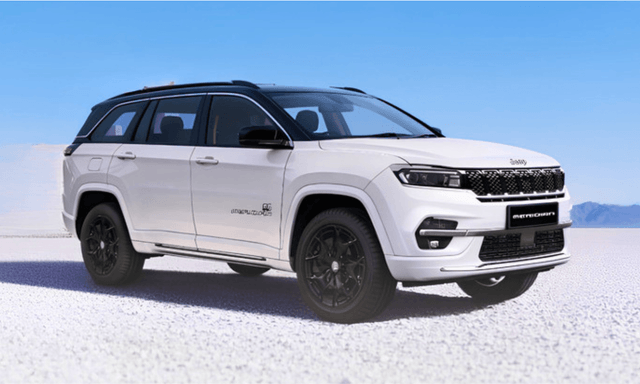 car&bike Team | Jul 25, 2026Jeep Meridian 85th Anniversary Edition Launched At Rs 36.05 LakhLimited to 85 units, the special edition gets cosmetic changes and also features the CARA AI voice assistant.1 min read
 car&bike Team | Jul 25, 2026River Indie Electric Scooter Crosses 50,000 Units Production MilestoneThe milestone comes less than three years after the first unit rolled out of the company's Hoskote manufacturing facility.2 mins read
 Jaiveer Mehra | Jul 27, 20262026 Maruti Suzuki Brezza Facelift Review: Bestseller Joins The Turbo ClubWhile Maruti’s facelifts have always tended to bring subtle updates over the outgoing models, the latest Brezza brings some heavy updates under the skin, including a new 6-speed manual gearbox and, for the first time, a turbocharged petrol engine option.1 min read
 Bilal Firfiray | Jul 24, 2026Honda ZR-V Review: Who Is It For?Honda has brought the new ZR-V to India as their current flagship offering. It’s a CBU, it’s a hybrid, and it’s here for a limited few. Who is it for though?1 min read
 Shams Raza Naqvi | Jul 15, 2026Ferrari 849 Testarossa Spider Driven: Rs. 11.25 Crore Meets 1,000 bhpWe got behind the wheel of the most powerful convertible from Ferrari. What makes the 849 Testarossa Spider Special? We tell you.1 min read
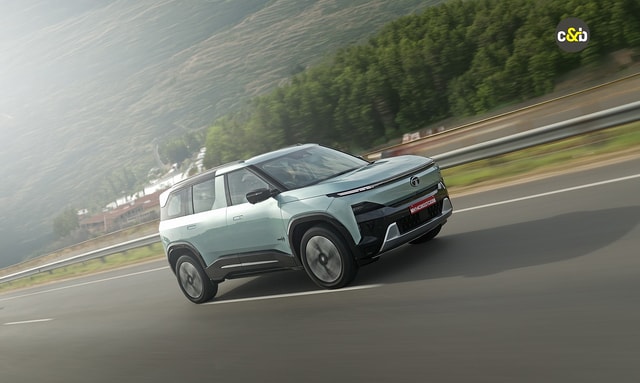 Bilal Firfiray | Jul 12, 2026Tata Sierra EV Review: Reborn In The Electric AgeThe Tata Sierra EV isn’t drastically different from its ICE counterpart when it comes to design. But being the seventh electric offering from the Indian brand, it has gotten a few things right, and very few things wrong. But is it a compelling package to buy?5 mins read
 Jafar Rizvi | Jul 13, 2026TVS Orbiter Long-Term Review (Report 1): Settling In Takes TimeFirst impressions weren't the strongest, but the Orbiter has made a mark in its first month in the car&bike garage.5 mins read