
Delhi Government Drafts Electric Vehicle Policy 2019


- The policy will be applicable for 3 years from the date of implementation
- The Policy aims to reduce oil & gas dependency by 4.8 million tonnes
- The government will set-up a separate division to oversee the EV policy
The Delhi government has released the draft for the Electric Vehicle Policy 2019 that aims at the frequent use of electric vehicles in the national capital. The policy draft states that the primary goal is to improve Delhi's air quality by bringing down emissions from the transport sector. As a result, the policy will seek the rapid adoption of Battery Electric Vehicles (BEVs) in such a way that they contribute 25 per cent to the overall new vehicle registrations by 2024." The road tax and registration will be waived off for all battery electric vehicles, during the period of this policy. The EV Policy will be valid for three years from the date of implementation.
The draft of the Delhi EV Policy was first put out in the public domain in November last year and suggestions and comments from the stakeholders including non-profit think-tanks, academic experts, EV and battery manufacturers, as well as multilateral bodies and concerned individuals. It new policy draft takes into consideration all the suggestions, according to the government.
The Delhi EV Policy will be focussing on electric two-wheelers and shared transport vehicles including the likes e-three-wheelers, buses and freight vehicles, since they contribute to the majority of the vehicular pollution, according to the government. The policy suggests that electric two-wheelers constitute only 0.2 per cent of annual two-wheeler sales, electric cars contribute 0.1 per cent to car sales, while electric three-wheeler sales at almost nil at present.
The Delhi government is targeting the induction of 35,000 within a year that will include two/three and four-wheelers. This will include 1000 EVs for last-mile deliveries and 250 public charging or swapping stations around Delhi. Furthermore, the government is targeting to register about five lakh EVs in the next five years, which will help save about Rs. 6000 crore in oil and liquid natural gas imports, as well as 4.8 million tonnes of CO2 emissions. This, the government says is equivalent to avoiding nearly one lakh CO2 emissions from petrol cars over their lifetime. The EVs will also help avoid 159 tonnes of 2.5 ppm tailpipe emissions. The policy further suggests that it plans to make the city, the EV capital of India.
INCENTIVES FOR TWO-WHEELERS
The Delhi EV Policy has also rolled out several provisions for electric two-wheeler buyers including a purchase incentive of Rs. 5000 per kWh of battery capacity. So, a two-wheeler with a battery capacity of 2 kWh will get a subsidy of Rs. 10,000 as compared to Rs. 5500 presently offered by DPCC as subsidy. There will also be a scrapping incentive of Rs. 5000 on offer, subject to evidence of matching contribution from the dealer or OEM.
The policy will also allow ride-hailing service providers to operate electric two-wheeler taxis in a big step-up for last-mile connectivity. Delivery services that employ two-wheelers will also be expected to transition 50 per cent of their fleet to electric vehicles by March 2023, and completely to March 2025.
INCENTIVES FOR ELECTRIC CARS
The policy offers an incentive of Rs. 10,000 per kWh of battery capacity for the first 1000 cars with a limit of Rs. 1.5 lakh per vehicle. All the leased and hired cars for commuter of GNTCD officers will transition to electric within a year from the date of notification of the policy.
INCENTIVES FOR ELECTRIC AUTOS & CARRIERS
The Delhi EV Policy also offers a purchase incentive of Rs. 30,000 on three-wheelers, up from zero at the moment. There will also be an interest subvention of five per cent on loans or hire purchase scheme for electric autos. That will bring the interest rate from a bank down to seven per cent from the average interest of 12 per cent, which will be the lowest for EVs in the country. There will also be an open permit system on a first-come-first basis for electric autos, which will be subjected to the cap of the maximum number of autos permissible in Delhi by Supreme Court orders. The electric carriers will be exempt from plying and idle parking of light goods vehicles on identified roads of NCT during specified timings.
INCENTIVES FOR ELECTRIC BUSES
The Delhi EV Policy will fall in line with the GNTCD to convert 50 per cent of its fleet to electric buses including smaller buses. All other vehicles will receive financial incentives for both fixed battery and swappable battery models. It will also encourage new technologies in the EV space.
CHARGING NETWORK
Furthermore, the government will also be building the charging infrastructure during the policy period. All new home and workplace parking will have to be EV ready with 20 per cent of the vehicle parking holding to be EV compliant. The Delhi government will provide 100 per cent subsidy on the purchase of charging equipment up to Rs. 6000 per charging point for the first 30,000 charging points. The subsidy though will be available through DISCOMS who will be in charge of the charging installations.
There will also be public charging and battery swapping facilities withing three km of travel in Delhi. Energy Operators (EO) will be invited to set-up charging and battery swapping stations across the capital with minimum lease rentals. The Delhi government will also provide capital subsidy for the cost of chargers installation including reimbursement of 100 per cent net State GST for EOs on the purchase of advanced batteries at swapping stations.
POLICY IMPLEMENTATION
In addition, the Delhi EV Policy states that there will be a dedicated EV cell within the transport department for effective implementation. The funding for all the incentives will be obtained from multiple sources including pollution/diesel cess, road tax, environment compensation charge under the Feebate concept. This will be brought under the non-lapsable State EV fund. A state EV board will also be constituted as the apex body for effective implementation of the policy. The policy also clarifies that current subsidies under DPCC shall continue.


Trending News


Latest News


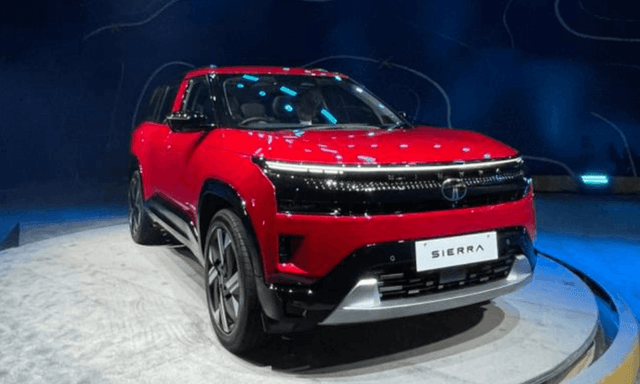 car&bike Team | Dec 14, 2025Top-Spec Tata Sierra Accomplished, Accomplished+ Prices RevealedRegardless of the powertrain combination chosen, all Tata Sierra Accomplished+ trims cost upwards of Rs 20 lakh (ex-showroom).2 mins read
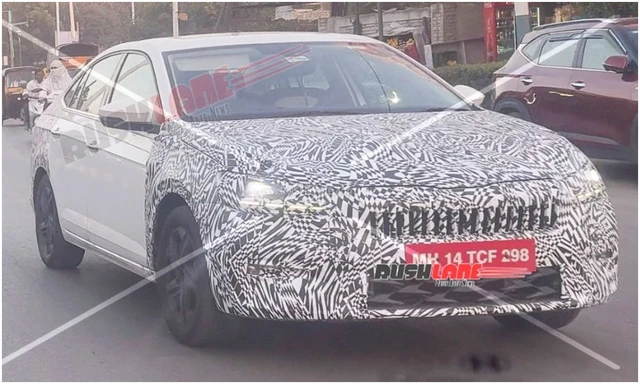 car&bike Team | Dec 13, 2025Skoda Slavia Facelift Spied Testing Again Ahead Of DebutThe facelifted Slavia is expected to debut in 2026 as Skoda-VW India looks to refresh its India 2.0 range.1 min read
 car&bike Team | Dec 13, 20252026 MG Hector Facelift Interior Previewed Ahead Of DebutLatest teaser video of the upcoming Hector facelift suggests minimal cosmetic changes to the interior as well as reveals a new alloy-wheel design.1 min read
 Jaiveer Mehra | Dec 13, 2025Passenger Vehicle, Two-Wheeler Sales Surge In November 2025: SIAMBoth segments reported a growth in the region of 20 per cent, though year-to-date sales growth in FY2026 was notably flatter at around 3 per cent.1 min read
 car&bike Team | Dec 12, 2025Nissan Entry MPV Design To Be Unveiled On December 18New MPV to be the first of three new models for India by Nissan, alongside the Tekton and a three-row SUV.1 min read
 Jaiveer Mehra | Dec 12, 2025New Mini Convertible Launched At Rs 58.50 LakhDrop-top variant of the iconic Cooper hatchback available in a single Cooper S spec.1 min read
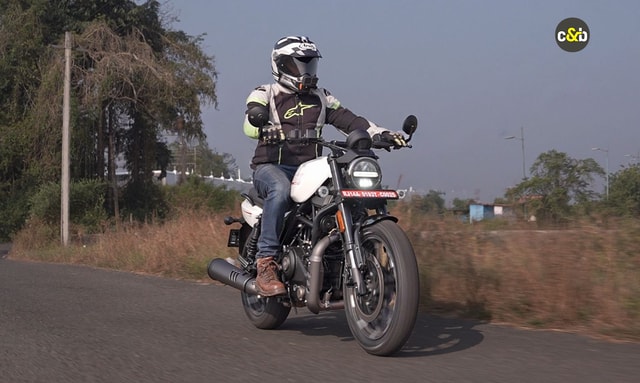 Janak Sorap | Dec 11, 2025Harley-Davidson X440 T First Ride Review: Smarter and SharperHarley-Davidson has taken the X440 and given it a more focused and engaging twist. The result is the X440 T—essentially the same platform but updated in areas that give the motorcycle more appeal and riders more thrill.5 mins read
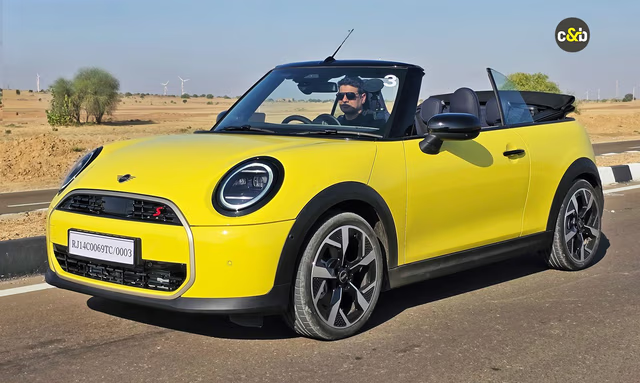 Shams Raza Naqvi | Dec 10, 20252025 Mini Cooper Convertible Review: More Colour On Indian RoadsThe updated Mini Cooper Convertible is set to be launched in the Indian market in the next few days. We drive it around Jaisalmer for a quick review.1 min read
 Bilal Firfiray | Dec 8, 2025Tata Sierra Review: India’s New Favourite?Marking its return after a few decades, the reborn Sierra has made everyone sit up and take notice. But is it worth the hype?10 mins read
 Girish Karkera | Dec 4, 20252026 Honda Prelude First Drive: Domesticated Civic Type RA sporty-looking coupe built to give customers a taste of performance but not at the expense of everyday practicality.5 mins read
 Seshan Vijayraghvan | Nov 29, 2025Mahindra XEV 9S First Drive Review: Big Electric SUV, Bigger ExpectationsThe XEV 9S lands at a time when the EV crowd is growing fast. It’s a big, born-electric, three-row SUV that starts under 20 lakh. It sits close to the XUV700 in size, but the brief is very different. Here’s what it’s like on the road.11 mins read