
Build Or Buy? Automakers Chasing Tesla Rethink Dependence On Suppliers


Automakers racing to develop battery-powered, software-driven vehicles to compete with Tesla Inc are confronting a new challenge: what technology to build themselves, and what to keep buying from suppliers.
Becoming more vertically integrated by doing more manufacturing in-house represents a major shift for most global automakers, who have relied for decades on suppliers to produce critical parts and software, and manage sprawling manufacturing networks in low-wage countries.
But some established automakers are embracing drastic changes to their longstanding build-or-buy calculations. One factor is the success of Tesla's electric vehicles, which rely on proprietary technology the company develops and manufactures itself. Another is the financial damage done by supply-chain breakdowns during the pandemic.
"The most important thing is we vertically integrate. Henry Ford ... was right," Ford Motor Co's CEO, Jim Farley, said at a conference in earlier this month. Farley's reference was to company founder Henry Ford's Rouge manufacturing complex in Dearborn, Michigan, which in the early 20th Century took in iron ore and other raw materials at one end, and churned Model Ts off the assembly line at the other.
Farley said the company had to move away from its early EV strategy of buying components off the shelf. Now, he said, Ford aims to control the supply chains "all the way back to the mines" that produce battery materials.
Graphic on share of in-house EV motor production: https://tmsnrt.rs/36KpTAj
Rivals including Volkswagen AG, General Motors Co and Mercedes-Benz AG are pursuing similar strategies. Mercedes last year acquired British high-performance electric motor manufacturer YASA, and has retooled a factory near Berlin to produce motors based on YASA technology. The German luxury car maker in March opened a new factory in Alabama to build battery packs for U.S.-made electric vehicles, and said it will partner with Japanese battery maker Envision AESC to build battery cells in the United States.
"We are going deep into sourcing," Mercedes-Benz Chief Executive Ola Kaellenius told reporters during a briefing in Alabama.
WINNING STRATEGY
The investments by automakers in mines, motors and batteries are a departure from decades of handing control over development and production to suppliers, who could produce steering controls, semiconductors and electronic components at greater scale and lower cost for multiple vehicle manufacturers.
In the new world of electric vehicles, however, investors have decided that Tesla's approach of buying raw materials directly, building its own batteries and engineering its own software is the winning strategy. Tesla's market capitalization has soared back above $1 trillion in recent weeks, outweighing that of Toyota Motor Corp, Volkswagen, GM and Ford combined.
"Major players have realized electric vehicles are the future, but they have yet to widely recognize that they have to up their game in terms of motors, transmissions, battery technologies, inverters and electric powertrains," Peter Rawlinson, CEO of EV startup Lucid Group Inc, said in an interview with Reuters. Rawlinson previously was vice president of vehicle engineering at Tesla.
Between the 1970s and the 2010s, the share of automaker-owned intellectual property in their vehicles decreased from 90% to 50%, according to Guidehouse Insights analyst Sam Abuelsamid.
That meant many automakers lacked the in-house engineering expertise to develop their own electric vehicle platforms, powertrains and battery packs when EV pioneer Tesla showed its vertically integrated cars were a hit with consumers.
"We're designing and building so much more of the car than other OEMs who will largely go to the traditional supply base and [execute] like I call it, catalog engineering," Tesla CEO Elon Musk said during a 2020 earnings call.
Tesla's approach is costly and the company has raised vehicle prices repeatedly in the last few years. Despite promising to deliver a model that could start at about $25,000, Musk earlier this year said "we're not currently working on the $25,000 car. At some point, we will. But we have enough on our plate right now."
TECHNOLOGY RACE
There is also a gap between what automakers say about their vertical integration strategies, and what happens as engineers try to meet deadlines to deliver new vehicles, supplier industry executives said.
"There's a lot of narrative about in-sourcing and vertically integrating, especially in areas like software," Kevin Clark, chief executive of auto supplier Aptiv Plc, told analysts in February. "Virtually all the OEMs that we are doing business with are struggling with software development."
Graphic on expected in-house EV motor production: https://tmsnrt.rs/3DAh0FC
Xavier Mosquet, a senior adviser at Boston Consulting Group, said many manufacturers still prefer to buy EV technology to avoid the cost and complexity of manufacturing in-house.
"There are a number of automakers who in a way want to continue buying and manage the final integration," Mosquet said, adding that it would take several years to determine which approach is successful.
Many automakers are also hesitant to completely in-source EV manufacturing at a time when EV purchases still make up only a fraction of total vehicle demand.
Today, only Tesla, EV startup Lucid Group Inc and Chinese BYD Co Ltd are completely making their electric motors in-house, according to IHS Markit, followed by Hyundai Motor Co and the Renault-Nissan-Mitsubishi alliance.
Other carmakers, including Mercedes-Benz Group, Ford and Porsche, are using electric motors by suppliers for their current EV models.
"The electric powertrain cannot be bought off the shelf at a world-class standard, it is not a commodity," Rawlinson said. "This is a technology race and the market doesn't see it yet."
Mercedes said it plans to make electric motors, battery packs and electronics in-house starting in 2024. The company is also working to reduce costs by securing raw materials directly from miners, Chief Technology Officer Markus Schaefer told Reuters.
(Reporting by Tina Bellon in Austin, Texas, and Joseph White in DetroitAdditional reporting by Ben Klayman in DetroitEditing by Matthew Lewis)
(This story has not been edited by NDTV staff and is auto-generated from a syndicated feed.)
Related News


Popular Tesla Models

Latest Cars


Upcoming Cars


Trending News


Latest News


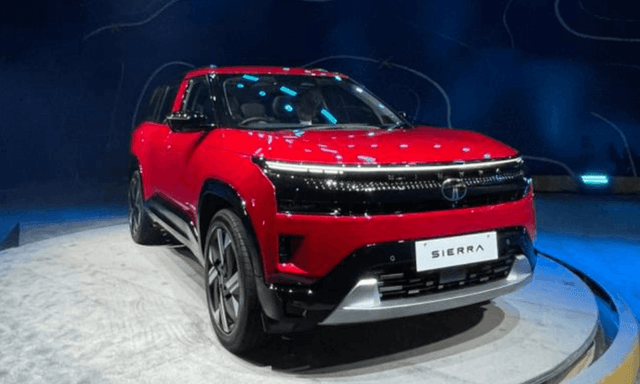 car&bike Team | Dec 14, 2025Top-Spec Tata Sierra Accomplished, Accomplished+ Prices RevealedRegardless of the powertrain combination chosen, all Tata Sierra Accomplished+ trims cost upwards of Rs 20 lakh (ex-showroom).2 mins read
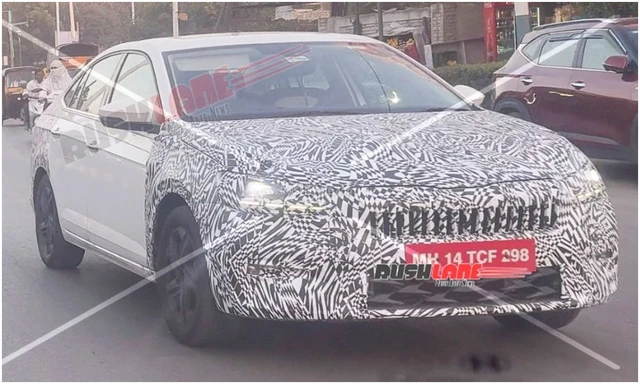 car&bike Team | Dec 13, 2025Skoda Slavia Facelift Spied Testing Again Ahead Of DebutThe facelifted Slavia is expected to debut in 2026 as Skoda-VW India looks to refresh its India 2.0 range.1 min read
 car&bike Team | Dec 13, 20252026 MG Hector Facelift Interior Previewed Ahead Of DebutLatest teaser video of the upcoming Hector facelift suggests minimal cosmetic changes to the interior as well as reveals a new alloy-wheel design.1 min read
 Jaiveer Mehra | Dec 13, 2025Passenger Vehicle, Two-Wheeler Sales Surge In November 2025: SIAMBoth segments reported a growth in the region of 20 per cent, though year-to-date sales growth in FY2026 was notably flatter at around 3 per cent.1 min read
 car&bike Team | Dec 12, 2025Nissan Entry MPV Design To Be Unveiled On December 18New MPV to be the first of three new models for India by Nissan, alongside the Tekton and a three-row SUV.1 min read
 Jaiveer Mehra | Dec 12, 2025New Mini Convertible Launched At Rs 58.50 LakhDrop-top variant of the iconic Cooper hatchback available in a single Cooper S spec.1 min read
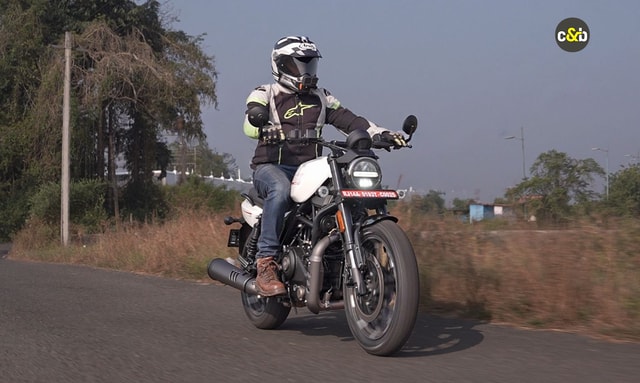 Janak Sorap | Dec 11, 2025Harley-Davidson X440 T First Ride Review: Smarter and SharperHarley-Davidson has taken the X440 and given it a more focused and engaging twist. The result is the X440 T—essentially the same platform but updated in areas that give the motorcycle more appeal and riders more thrill.5 mins read
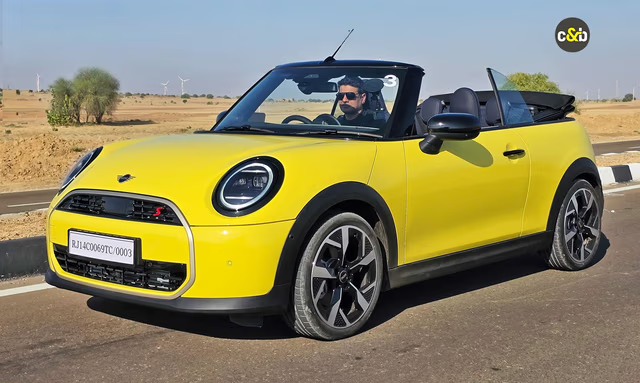 Shams Raza Naqvi | Dec 10, 20252025 Mini Cooper Convertible Review: More Colour On Indian RoadsThe updated Mini Cooper Convertible is set to be launched in the Indian market in the next few days. We drive it around Jaisalmer for a quick review.1 min read
 Bilal Firfiray | Dec 8, 2025Tata Sierra Review: India’s New Favourite?Marking its return after a few decades, the reborn Sierra has made everyone sit up and take notice. But is it worth the hype?10 mins read
 Girish Karkera | Dec 4, 20252026 Honda Prelude First Drive: Domesticated Civic Type RA sporty-looking coupe built to give customers a taste of performance but not at the expense of everyday practicality.5 mins read
 Seshan Vijayraghvan | Nov 29, 2025Mahindra XEV 9S First Drive Review: Big Electric SUV, Bigger ExpectationsThe XEV 9S lands at a time when the EV crowd is growing fast. It’s a big, born-electric, three-row SUV that starts under 20 lakh. It sits close to the XUV700 in size, but the brief is very different. Here’s what it’s like on the road.11 mins read