
7 Tips On How To Maintain Your Electric Car During The Lockdown


- Electric vehicles have similar SOPs as ICE cars
- The 12-volt battery needs special attention & can drain faster
- Always use the slow charger when charging the EV after a long time
Unless you were away from home for a long time, chances were slim you weren't driving you on a regular basis. But as things stand today, the lockdown has made things difficult for everyone, and your car is parked downstairs waiting to see the open roads. We've spoken time and again about how to maintain your internal combustion engine (ICE) vehicle during the lockdown. But there is little information available about how to maintain your electric car during this period. So, answering your concerns, here's what you need to do to ensure your EV is running smoothly post the lockdown.

It is advised to park your vehicle in a covered space or use a car cover to avoid damage to the paint
1. Keep It Clean
As it is with petrol and diesel cars, make sure your electric car is cleaned of any dust or grime before you've parked it for a long period. Ideally, park your vehicle in a covered space or use a car cover to avoid damage to the paint under the scorching heat. You should also make sure the tyres are fully inflated before you've parked your car. A little hack is to overinflate the tyres. So when you start the car a gap of a few weeks, you still have enough air despite losing pressure to get around. It will also help avoid a bald spot.

Do ensure that your high voltage battery has a state of charge between 10 per cent and 80 per cent.
2. Fully Charge The High Voltage Battery
Manufacturers recommend fully charge the EV's battery before you park the car for good. This is done to ensure the battery good health over time. Do remember, a car's battery will lose charge over time whether you use it or not. If you are storing your EV without plugging it in, ensure that your high voltage battery has a state of charge between 10 per cent and 80 per cent.
In the case of the recently launched Jaguar I-Pace, the automaker says, "The Jaguar I-Pace can be left unattended for up to six months. However, it is recommended that the vehicle is charged once a month. The smart on-board battery management system in the I-Pace controls the high voltage battery during the non-use period and makes sure that very little energy is used."

It's important to maintain the health of the 12-volt battery that runs the other systems on the car.
3. Maintaining The Health Of The 12 Volt Battery
While we've talked about the big batteries on electric vehicles that power the electric motor, there's a secondary 12-volt auxiliary battery that runs the other systems on the car. This includes systems like the lights, infotainment system, standby mode, wiper and window motors, as well as turning on the power system, all of which works on the 12-volt battery. Now, this is the same as an ICE-powered car because it's more cost-effective to use the same parts and technology, rather than leaning on the bigger battery to charge the smaller functions as well.

MG Motor India recommends switching off the iSmart infotainment system on the ZS EV to save the battery
However, do note that unlike an ICE vehicle wherein an alternator charges the battery when the engine is running, there is no alternator on an EV. Instead, what you get is a DC to DC convertor that converts the high voltage 400 volts of electricity into 12 volts and charges the 12-volt battery. When the big battery isn't being used, it won't be able to charge the small battery either.
Unlike an ICE car though where if the battery is down to even 10-11 volts, it can just give enough charge to start the engine, EVs need a continuous charge of 12 volts to start the power system before the convertor kicks in.
MG Motor India recommends switching off the iSmart infotainment system on the ZS EV to save the battery. The company also recommends using the air-conditioning blowers as well as the iSmart system when the motor is turned off.

To avoid the risk of completely draining the 12-volt battery, it's advised to remove the negative terminal after you've parked the vehicle.
Photo Credit: Pixabay
4. Remove the Negative Terminal Of Your 12-Volt Battery
To avoid the risk of completely draining your 12-volt battery, it's wise to remove the negative terminal from the battery after you've parked the vehicle. Before you do that though, make sure that you have the key fob and the owner's manual with you and not in the car. You may need to access the vehicle using the physical key in case the battery is disconnected.

It's advised to follow the instructions given in the owner's manual for your EV for jump-starting the same.
5. How To Charge Your 12-Volt Battery
In case you forgot to disconnect the battery, you will have to jump-start the same using the instructions given in the owner's manual for your EV. Much like regular cars, you will need jumper cables to charge the battery. It would be wise to invest in a battery tender if you own an electric vehicle, in case the 12-volt battery happens to give away, especially after a couple of years.
Another trick, especially in a car that offers the "pre-cool" feature, is to run the AC for a brief period. Unlike other electrical systems that draw power from the 12-volt battery, an EV's HVAC unit is connected to the high voltage battery. So when you choose to pre-cool the cabin using the mobile app, it will also consume power from the high voltage battery, which in turn will charge the 12-volt battery as well. However, this little hack differs from vehicle-to-vehicle.

Make sure to drive it at least once in 15 days while maintaining social distancing protocols.
6. When Using The EV After The Lockdown
Tata Motors recommends charging the vehicle using only a slow charger up to 100 per cent SOC (state of charge) before using the vehicle on road. Do not use the fast charger if the car has been stationary for a while. Most cars come with a standard slow charger with the vehicle
7. Safety Protocols
Lastly, every safety protocol that applies to regular cars, also applies to your electric vehicle. So make sure the car is locked and covered. If you do not intend to remove the battery's negative terminal, make sure to drive it at least once in 15 days while maintaining social distancing protocols. Keep it running for about 20 minutes, which allows the 12-volt battery to charge and for all other systems to function properly.
Related News


Latest Cars


Upcoming Cars


Latest News


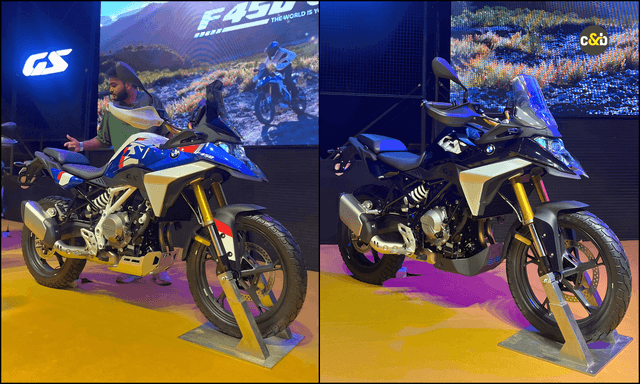 Jafar Rizvi | Apr 23, 2026BMW F 450 GS: Variants, Features, Prices ExplainedThe F 450 GS is offered in three variants: Basic, Exclusive and the range-topping GS Trophy. Here’s a look at what each variant brings to the table.4 mins read
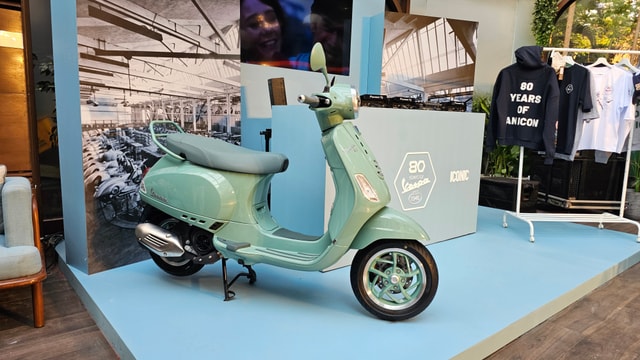 Bilal Firfiray | Apr 23, 2026Vespa Tech 80th Launched In India; Celebrates Scooter’s 80-Year JourneyVespa Tech 80th anniversary edition is launched in India in 125cc and 150cc versions. Special anniversary edition gets retro styling, Verde Pastello paint and commemorative details. Pricing to be announced soon1 min read
 Jafar Rizvi | Apr 23, 2026BMW F 450 GS Launched In India At Rs 4.70 LakhOffered in three variants, deliveries for the F 450 GS will begin from June 2026.4 mins read
 Seshan Vijayraghvan | Apr 23, 20262026 Yezdi Scrambler Launched In India; Prices Start At Rs. 2 LakhThe 2026 Yezdi Scrambler gets updated styling with new colour options, along with new features and hardware. The1 min read
 Jaiveer Mehra | Apr 23, 2026BSA Scrambler 650 Launched In India; Prices Start At Rs 3.25 lakhThe Scrambler 650 is BSA’s second motorcycle to arrive in India, following the Gold Star 650.2 mins read
 car&bike Team | Apr 23, 2026BMW F 450 GS Launch Highlights: Price, Specifications, Images0 mins read
 Seshan Vijayraghvan | Apr 23, 2026Vega Bolt Bluetooth Smart Helmet Review: Smart, Simple, and FunctionalThe Vega Bolt Bluetooth Smart Helmet is a practical take on connected riding gear, aimed at commuters and riders who want integrated functionality without the hassle of add-ons.1 min read
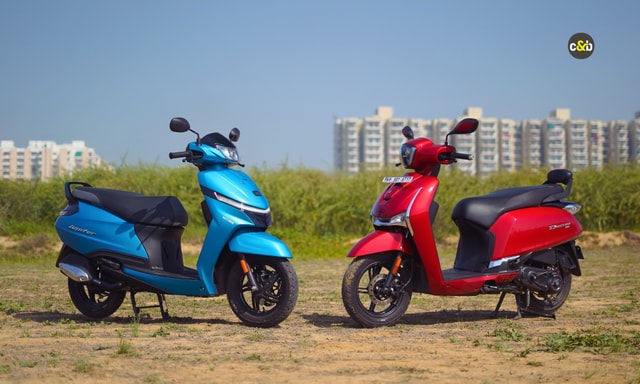 Preetam Bora | Apr 20, 2026Hero Destini 110 Vs TVS Jupiter 110 Comparison ReviewThe Hero Destini 110 and the TVS Jupiter 110 both sit in the same price bracket and target the same buyer. But they take different approaches. Which 110 cc scooter should you buy?9 mins read
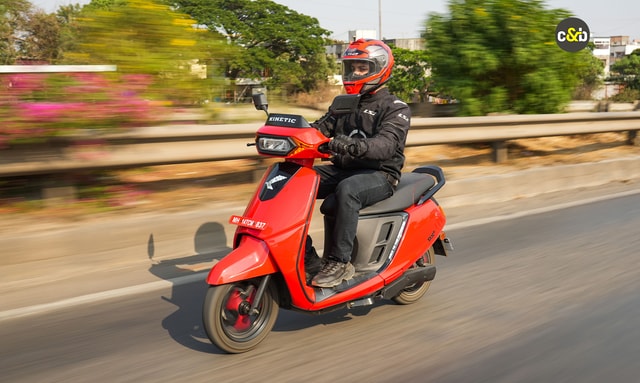 Amaan Ahmed | Apr 15, 2026Kinetic DX+ Review: Pure Nostalgia Can Only Take You So FarNo smoke, no two-stroke – the reborn Kinetic relies heavily on the charm of the original’s design to sway buyers, but can it offer genuine substance to go with the style?12 mins read
 Janak Sorap | Apr 10, 2026Triumph 350 Range First Ride Review: More Affordable, More Refined, Still Fun?Triumph’s shift to 350cc aims to cut costs, but does it affect the ride experience?5 mins read
 car&bike Team | Apr 7, 2026Flying Flea C6 Review: Royal Enfield’s Electric Gamble?The C6 is the beginning of Royal Enfield's EV journey under the Flying Flea brand. Does it make a strong impression? Read on.8 mins read